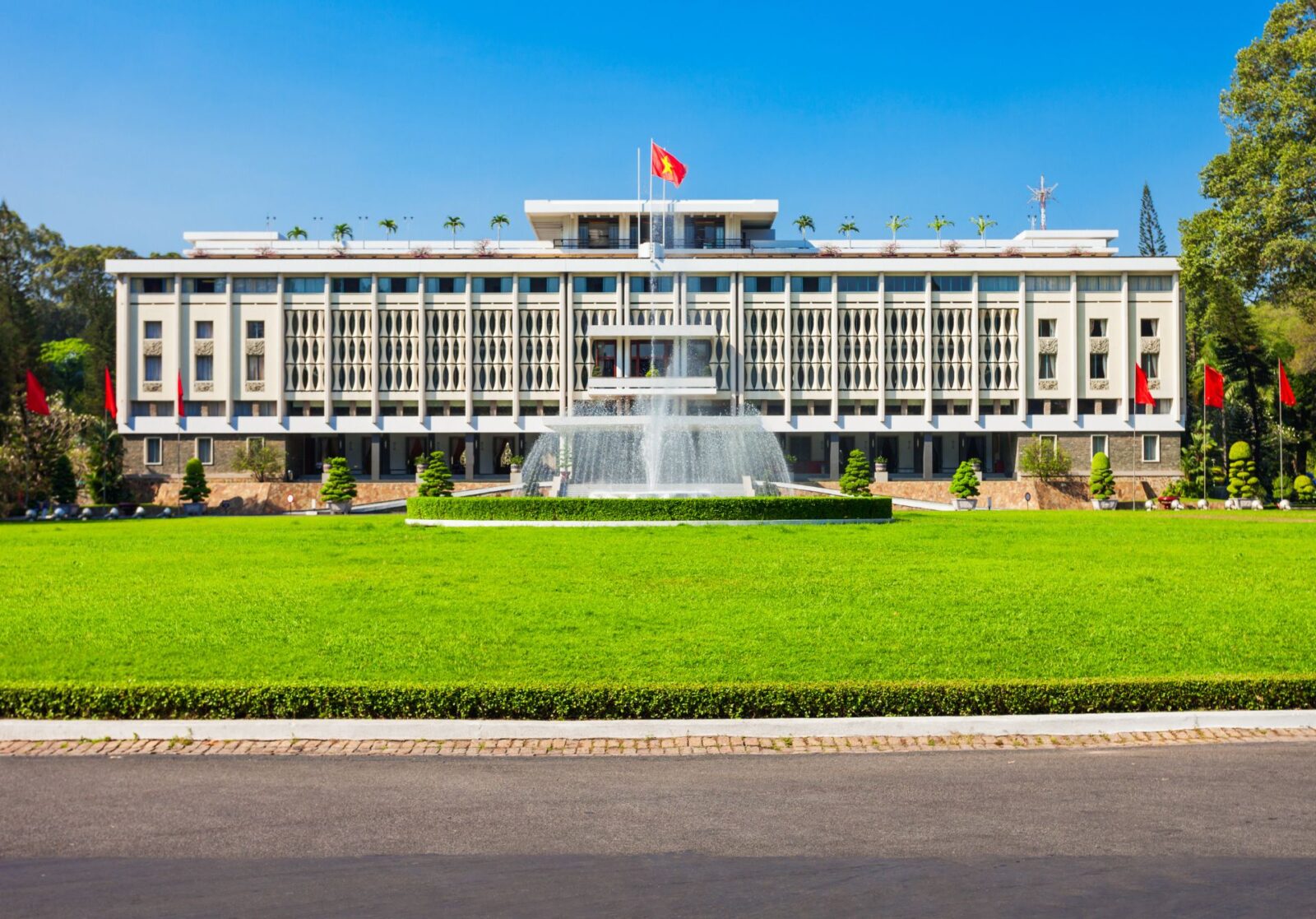
Standing proudly at 135 Nam Ky Khoi Nghia Street, the Reunification Palace (also known as Independence Palace) isn’t just another tourist attraction – it’s a fascinating window into Vietnam’s pivotal moments. This architectural marvel serves as both a museum and a symbol of Vietnam’s journey to independence, making it an absolute must-visit for history buffs and casual tourists alike.
Historical Significance
Built between 1962 and 1966, this structure replaced the original Norodom Palace after it was damaged in a 1962 bombing. The palace gained international recognition when North Vietnamese tanks crashed through its gates on April 30, 1975, marking the fall of Saigon and the end of the Vietnam War. Today, it stands preserved almost exactly as it was in 1975, offering visitors an authentic glimpse into that historic moment.
Architectural Marvel and Design
Designed by renowned architect Ngô Viết Thụ, the palace showcases a unique blend of traditional Vietnamese and modern influences. The five-story structure spans an impressive 120,000 square feet and features:
- Distinctive modernist architecture with traditional Vietnamese elements
- Perfectly manicured gardens spanning 18 hectares
- A network of underground tunnels and bunkers
- Original 1960s furnishings and equipment
- Helicopter landing pad on the roof
What to Expect During Your Visit
A typical visit to the Reunification Palace takes about 1-2 hours. Here’s what you shouldn’t miss:
- State Reception Rooms: Elaborate meeting spaces where important diplomatic functions were held
- Presidential Living Quarters: Preserved living spaces complete with original furniture
- Command Center: Underground bunkers with original maps and telecommunications equipment
- Rooftop Terrace: Offering panoramic views and home to the famous helicopter
- Game Room: Complete with a vintage card table and bar
Practical Information for Visitors
For the best experience, keep these details in mind:
- Opening Hours: Daily from 7:30 AM to 11:00 AM and 1:00 PM to 4:00 PM
- Entrance Fee: 40,000 VND (approximately $1.70 USD) for adults
- Guided Tours: Available in English, French, Japanese, and Chinese
- Photography: Allowed in most areas except for specific restricted zones
- Dress Code: Modest dress is recommended (covered shoulders and knees)
Tips for the Best Experience
Make the most of your visit with these insider tips:
- Visit early morning or late afternoon to avoid the largest crowds
- Join a guided tour for in-depth historical context (available every 15 minutes)
- Allow at least 2 hours for a comprehensive visit
- Combine your visit with nearby attractions like Notre Dame Cathedral and the Central Post Office
- Bring water – the palace can get quite warm, especially during summer months
Why It’s Worth Your Time
The Reunification Palace offers more than just historical significance. It provides:
- A unique insight into Vietnam’s political history
- Perfectly preserved 1960s architecture and design
- Original furnishings and equipment from the era
- Beautiful photo opportunities
- A central location perfect for city exploration
Summary
The Reunification Palace stands as one of Ho Chi Minh City’s most significant historical landmarks, offering visitors an unparalleled glimpse into Vietnam’s past. Whether you’re a history enthusiast, architecture lover, or simply curious traveler, this well-preserved time capsule provides a fascinating journey through one of Vietnam’s most pivotal moments. Its central location, affordable entry fee, and rich historical significance make it an essential stop on any Ho Chi Minh City itinerary. Don’t miss the opportunity to walk through these halls of history and experience firsthand the place where Vietnam’s path to reunification reached its dramatic conclusion.