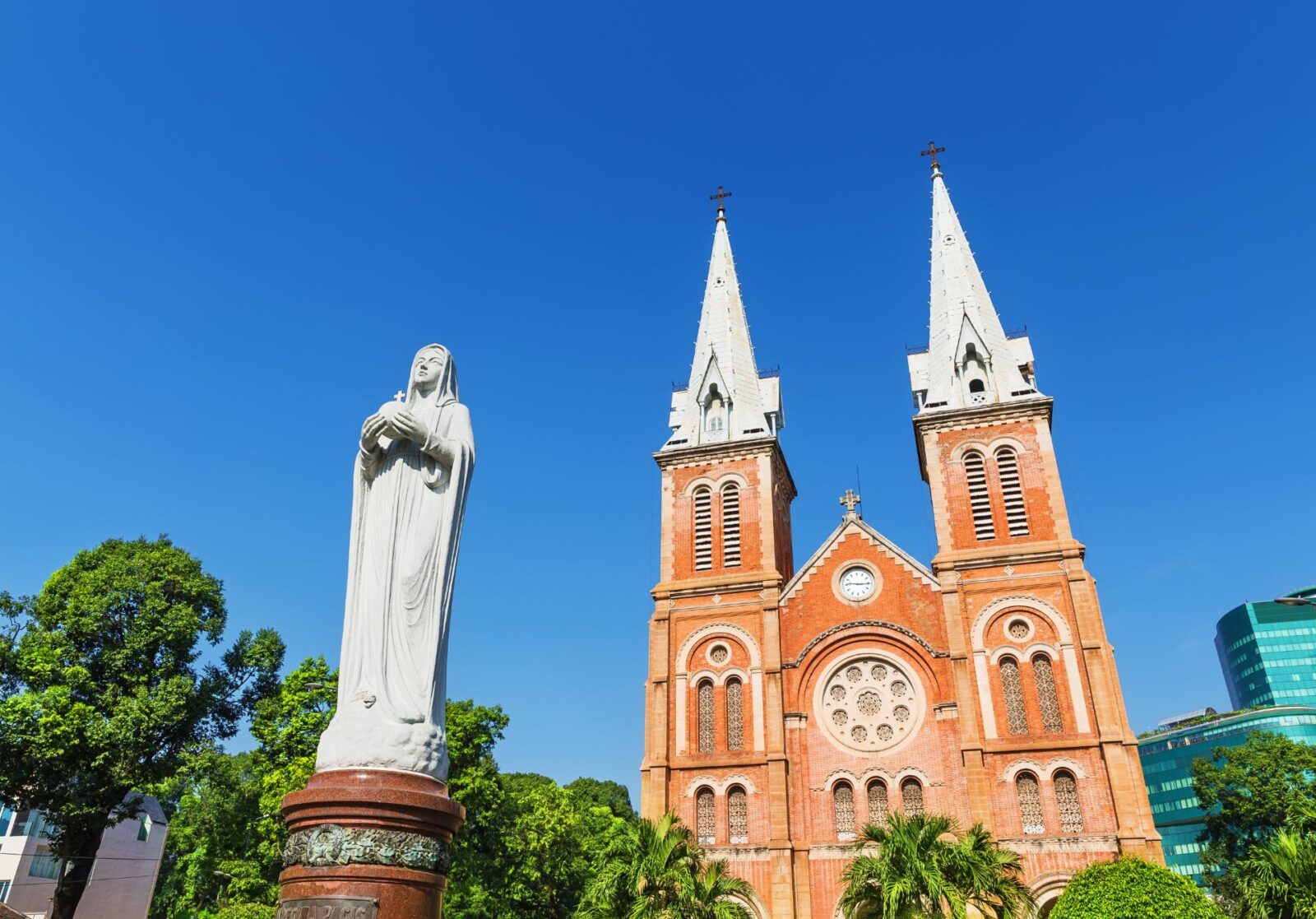
Standing majestically in the bustling center of Ho Chi Minh City, the Notre-Dame Cathedral Basilica serves as a striking reminder of Vietnam’s French colonial heritage. Built between 1863 and 1880, this architectural masterpiece continues to captivate visitors with its remarkable blend of European design and Southeast Asian context.
Architectural Magnificence
The cathedral’s architecture showcases classic French Gothic design, with materials imported directly from France. The building’s most notable features include:
- Twin square towers reaching 58 meters (190 feet) high, adorned with six bronze bells
- All-red brick facade shipped from Marseille, which has maintained its vibrant color despite decades of tropical weather
- 32 stained glass windows crafted by the famous Lorin firm of Chartres, France
- A peaceful interior spanning 93 meters in length, with room for 1,200 worshippers
Historical Significance
The cathedral’s construction marked a pivotal moment in Vietnam’s colonial period. Originally named Saigon Church, it received its basilica status from the Vatican in 1962. Throughout its history, the cathedral has witnessed:
- The establishment of French colonialism in Cochinchina
- Survival through multiple wars and political changes
- A reported miracle in 2005 when the Virgin Mary statue was said to have shed tears
- Major renovation projects, including the current restoration scheduled from 2017 to 2023
Visitor Experience & Practical Information
For tourists and culture enthusiasts, the cathedral offers a unique blend of spiritual and historical experiences. Here’s what visitors need to know:
- Location: 01 Công xã Paris, Bến Nghé, District 1, Ho Chi Minh City
- Best visiting hours: Early morning or late afternoon to avoid crowds and heat
- Photography: Allowed outside; respectful photography permitted inside
- Dress code: Conservative attire required (covered shoulders and knees)
- Services: Mass is still held regularly in both Vietnamese and English
Cultural Context & Surrounding Area
The cathedral sits in District 1, Ho Chi Minh City’s cultural and commercial heart. Visitors can combine their cathedral visit with an exploration of nearby attractions:
- Saigon Central Post Office: A stunning colonial building directly opposite
- Diamond Plaza: Modern shopping center within walking distance
- Book Street: A charming pedestrian area perfect for afternoon browsing
- Nguyen Hue Walking Street: Popular evening destination for locals and tourists
Conservation Efforts & Modern Relevance
The cathedral is currently undergoing its most significant renovation in history, demonstrating Vietnam’s commitment to preserving its architectural heritage. The restoration project includes:
- Comprehensive structural reinforcement
- Careful cleaning and restoration of the original brickwork
- Updates to protect against climate-related degradation
- Modern safety features while maintaining historical authenticity
Conclusion
Notre-Dame Cathedral Basilica stands as more than just a religious monument; it’s a symbol of Ho Chi Minh City’s rich cultural tapestry and historical significance. Whether you’re a history buff, architecture enthusiast, or casual tourist, the cathedral offers a compelling glimpse into Vietnam’s complex past while serving as a living, breathing part of its vibrant present. As restoration work continues, this architectural marvel promises to enchant future generations while maintaining its status as one of Southeast Asia’s most remarkable colonial-era structures.
For visitors to Ho Chi Minh City, the cathedral isn’t just a stop on a tourist itinerary – it’s a gateway to understanding the city’s unique character, where French colonial influence meets Vietnamese culture in a harmonious blend of old and new. Make sure to include this architectural gem in your exploration of the city, and take time to appreciate both its historical significance and its ongoing role in modern Vietnamese society.